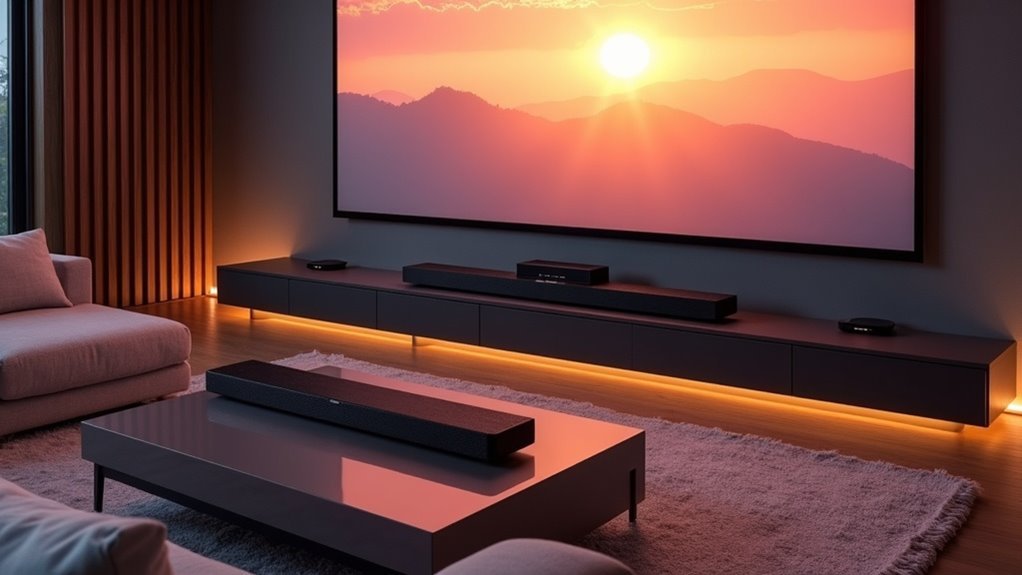
Q Symphony is Samsung’s innovative technology designed to elevate audio quality by harmonizing sound output from compatible Samsung soundbars and TVs. By connecting your soundbar to the TV using HDMI or optical cables, you can experience a richer, more immersive audio environment when enjoying movies and shows. This technology enhances dialogue clarity and broadens the soundstage for more dramatic moments. For those looking to optimize their soundbar setup and troubleshoot common issues, there’s much more to discover.
Key Takeaways
- Q Symphony is a technology that significantly enhances audio by merging sound from compatible Samsung soundbars and TVs, creating a more immersive listening experience.
- To utilize this feature, connect your soundbar to a Samsung TV using an HDMI or optical cable, and adjust the sound settings to enable dual output for optimal performance.
- This technology enhances dialogue clarity, expands the soundstage, and boosts volume without distortion, making it particularly beneficial for enjoying movies and sports.
- Q Symphony is compatible with Samsung soundbars released after 2020, as well as specific Samsung TVs, thereby elevating overall audio performance.
- If you encounter issues, troubleshooting may include resetting the soundbar, ensuring all connections are secure, and verifying the TV’s sound output settings to ensure everything operates seamlessly.
Understanding Q Symphony Technology
Q Symphony technology revolutionizes how you experience sound with soundbars by allowing compatible Samsung soundbars and TVs to function together, creating a truly immersive audio environment.
This innovative feature enhances sound quality by merging the spatial capabilities of your Samsung TV’s speakers with the direct sound projection from the soundbar.
To enable Q Symphony, connect your soundbar and TV via HDMI or optical cable, and adjust the sound settings on your TV to select the dual output option.
While many users enjoy a significant boost in audio performance with their soundbars, individual experiences may vary, resulting in differing levels of satisfaction.
Compatibility With Samsung Soundbars
When considering the integration of Q Symphony with your soundbar, it’s crucial to verify compatibility with this innovative technology.
To fully enjoy advanced sound, confirm your soundbar meets the following criteria:
Ensure your soundbar meets the necessary criteria for an enhanced audio experience.
- Released after 2020 for better compatibility.
- Connected to the TV via HDMI or optical cable.
- Check your specific model in the user manual for support details.
- Compatible Samsung TVs enhance the overall audio experience.
Be sure to explore the features of your soundbar to maximize your audio enjoyment.
Setting Up Q Symphony
To effectively set up your soundbar, start by connecting your Samsung soundbar to the TV using either an HDMI or optical cable, which is vital for enabling simultaneous sound output.
For 2022 model TVs, navigate to Settings, select Sound, and choose “TV + Soundbar.”
For 2020 and 2021 models, access the Smart Hub, go to Settings, and select “TV + [AV] Soundbar.”
Confirm your soundbar is set to the correct source, typically labeled “D.IN,” to allow proper integration with the TV.
This meticulous setup is essential for enhancing audio quality, optimizing your experience for movies and sports.
Benefits of Using Q Symphony
Leveraging Q Symphony can transform your audio experience by allowing simultaneous sound output from both your Samsung TV and soundbar.
This advanced sound technology creates a rich, immersive sound profile that enhances your viewing pleasure. Here are four key benefits specifically for soundbars:
- Enhanced Clarity: Dialogue-heavy content becomes more distinct, making voices stand out, which is particularly beneficial for movies and shows.
- Richer Soundscape: Combining your soundbar with your TV speakers adds depth and height to audio, creating a fuller listening experience.
- Increased Volume: Enjoy higher sound levels from your soundbar without distortion, perfect for those action-packed scenes.
- Expanded Soundstage: Experience a more enveloping atmosphere for movies and sports, making you feel like you’re right in the middle of the action.
With Q Symphony, you’ll elevate your entertainment experience like never before with your soundbar.
User Experiences and Feedback
When using soundbars equipped with Q-Symphony, your experience with sound quality can vary considerably.
While some users report notable improvements in loudness and voice clarity, others find little to no enhancement in overall audio performance.
This inconsistency highlights the importance of individual preferences and setup when evaluating the effectiveness of this feature in enhancing your home audio experience.
Sound Quality Improvement
While user experiences with soundbars vary, many report noticeable improvements in sound quality, particularly in dialogue clarity and overall immersion. The integration of soundbars with TVs creates a richer listening experience.
Here are some common user observations regarding soundbars:
- Enhanced dialogue clarity, especially in movies.
- Increased loudness and depth in soundstage.
- Improved audio during sports events, delivering excitement.
- Heightened immersion due to the superior audio performance of soundbars.
While many appreciate these enhancements, some users choose to disable certain features of their soundbars, citing minimal differences in sound quality improvement.
Voice Clarity Enhancement
Many users find that soundbars, particularly those with Q-Symphony technology, greatly enhance voice clarity, especially during dialogue-driven scenes.
By utilizing both the soundbar and the TV speakers, this feature effectively amplifies dialogue, making it easier to follow conversations. Additionally, the Smart Things app‘s voice amplifier setting further boosts this clarity enhancement.
Many soundbars, especially those compatible with Samsung TVs, offer advanced sound settings designed specifically for improving dialogue understanding. Users often discover that adjusting the center channel settings on their soundbar helps balance sound and increase dialogue volume.
However, individual experiences can vary, so results may depend on your specific audio setup and preferences.
User Experience Variability
User experiences with Q-Symphony soundbars can vary considerably, reflecting a spectrum of opinions on their effectiveness.
- Enhanced loudness and soundstage are widely appreciated by users.
- Some individuals notice minimal improvements in overall sound quality.
- While voice clarity enhancements work well for some, others find no noticeable difference.
- Resetting the soundbar often resolves audio issues linked to Q-Symphony functionality.
These variances underscore the subjective nature of audio quality, which is influenced by personal preferences and environmental factors.
To navigate these challenges and achieve a more satisfying audio experience, consulting your user manual for guidance on optimizing your soundbar settings can be beneficial.
Troubleshooting Q Symphony Issues
If you’re encountering audio issues with your soundbar while using Q Symphony, it’s essential to begin by resetting the soundbar to its default settings.
Ensure that your soundbar is securely connected to the TV via HDMI or optical cable, as this connection is crucial for Q Symphony to function properly.
Furthermore, tweaking the sound output settings on your TV can significantly enhance your audio experience.
Common Audio Problems
While using your soundbar, you might encounter common audio problems that can disrupt your experience.
To enhance your audio setup, consider addressing these issues:
- Sound synchronization: Check connections and audio output settings.
- Low volume or clarity: Adjust sound settings or enable voice enhancement features.
- No sound output: Verify HDMI or optical cables are securely connected and the soundbar is set to the correct input source (typically “D.IN.”).
- Persistent issues: A factory reset may restore default settings without affecting firmware.
Regular firmware updates can also improve overall audio quality, promoting a superior soundbar experience.
Resetting Soundbar Solutions
Persistent audio issues can significantly detract from your experience with Q-Symphony, making it essential to take a systematic approach to troubleshooting. One effective solution is to reset your soundbar. Begin by disconnecting HDMI cables to ensure a clean start. Performing a factory reset will restore the soundbar to its default settings without altering the firmware, often improving inconsistent audio from your TV. After completing the reset, be sure to check your soundbar settings to confirm that the correct input source is selected for Q-Symphony functionality.
| Step | Description |
|---|---|
| Unplug Cables | Disconnect HDMI cables before resetting |
| Perform Reset | Execute a factory reset on the soundbar |
| Check Settings | Verify the input source after the reset |
Enhancing Voice Clarity With Q Symphony
Q-Symphony significantly improves voice clarity by combining the audio output from both your compatible soundbar and TV speakers.
This synergy creates a more immersive experience, particularly beneficial for dialogue-heavy content. To optimize your soundbar setup, consider these features:
- Voice Amplifier Setting: Easily accessible via the Smart Things app.
- Advanced Sound Settings: Customize center channel output for enhanced dialogue clarity.
- User Feedback: Individual experiences may vary, leading to mixed results.
- Rich Sound Environment: Designed to make it easier to understand spoken dialogue.
Additional Resources and Support
To fully leverage the benefits of your soundbar, accessing additional resources and support can greatly enhance your experience.
You can join the Samsung Members Community for tips tailored to your specific soundbar model, optimizing feature use. For direct inquiries, Samsung provides a dedicated phone support team and live chat options, ensuring you get real-time assistance.
Additionally, visiting the Manuals & Downloads page offers detailed instructions on setting up your soundbar and troubleshooting issues.
Finally, consider submitting feedback about your experiences; your insights can contribute to ongoing improvements and enhance support resources for all users.