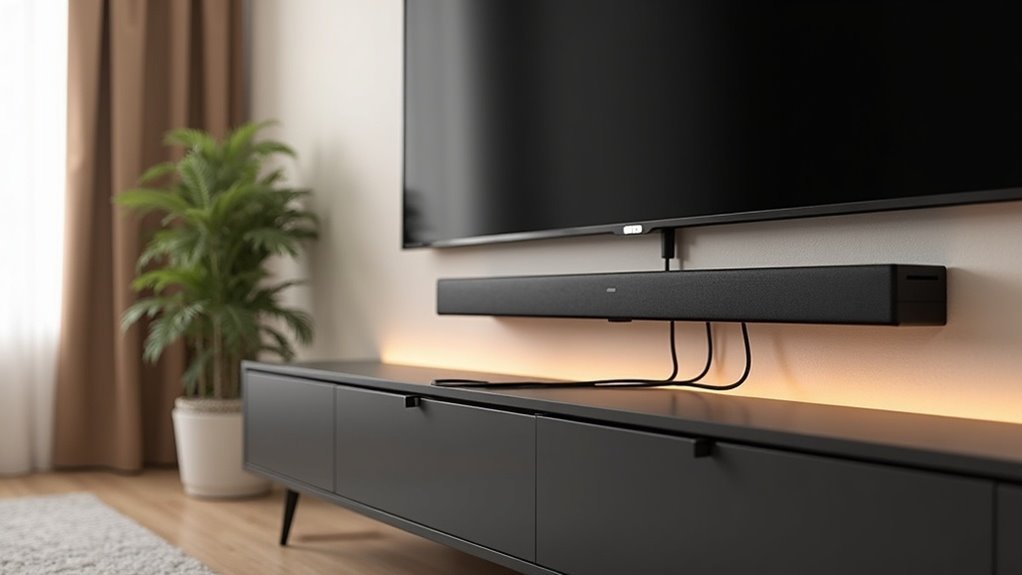
To effectively hide soundbar cables, start by installing a recessed power outlet behind the soundbar to conceal the power cord. Next, use low-voltage, in-wall rated HDMI or Optical cables for audio signals, ensuring they are properly routed through wall cavities. Adhere to safety standards by opting for FT4/FT6 rated in-wall speaker wires if connecting to an amplifier. Implementing good cable management will help achieve a clean aesthetic that complements your soundbar setup. For more advanced methods and installation tips specific to soundbars, you might find the following sections helpful.
Key Takeaways
- Install a recessed power outlet behind your soundbar to discreetly conceal the power cord, creating a cleaner look for your audio setup.
- Use low-voltage, in-wall rated HDMI or Optical cables to safely hide audio signals within wall cavities for a sleek installation.
- Ensure the soundbar is mounted at a height that effectively covers any visible outlets, enhancing the overall aesthetics of your entertainment space.
- Utilize cable management tools to organize and secure all wiring neatly, contributing to a polished appearance around your soundbar.
- Verify that wall cavities are available for routing wires and that they comply with safety standards during the installation process to ensure a safe and tidy setup.
Requirements for Hiding Active Soundbar Wires
To effectively hide active soundbar wires, you’ll need to contemplate a few essential requirements.
First, you must install a recessed power outlet behind the soundbar, ensuring it remains discreet while adhering to safety standards. Keep in mind that active soundbars require a power cord that can’t be run through walls due to fire hazards.
Install a recessed power outlet behind the soundbar for a discreet setup, while adhering to safety standards and avoiding running power cords through walls.
Instead, you can run low-voltage, in-wall rated HDMI or Optical cables to conceal audio signals. Proper cable management is vital, so choose the soundbar’s height carefully to hide wires and maintain your setup’s aesthetics.
Additionally, ensure you work within a wall cavity to avoid any structural damage during installation.
Conditions for Hiding Active Soundbar Cables
Hiding active soundbar cables requires careful consideration of specific conditions to guarantee both safety and aesthetics.
First, ensure you install a recessed power outlet behind the soundbar to effectively conceal the power cord. However, avoid placing the power outlet inside walls, as fire hazard regulations prohibit this.
To hide low-voltage wires, such as HDMI or Optical cables, fish them through the wall if there’s a cavity available.
Keep in mind to mount the soundbar at a height that conceals the outlet.
With proper planning and installation techniques, you can achieve a clean look while adhering to safety codes, enhancing your soundbar setup.
Requirements for Hiding Passive Soundbar Cables
When planning to hide passive soundbar cables, it’s vital to use FT4/FT6 rated in-wall speaker wires, as these meet the necessary safety standards for in-wall installations.
You’ll need to ensure your soundbar connects to a separate amplifier or AV receiver, which requires meticulous cable routing. It’s essential to fish HDMI cables or Optical cables through the wall for a clean look.
Verify that the wall has a cavity for hiding the wires, and mount the soundbar bracket below your TV for optimal concealment.
Proper installation involves cutting holes in drywall and utilizing cable management tools to secure and organize the wiring neatly.
Conditions for Hiding Passive Soundbar Cables
To achieve a clean and organized look for your soundbar installation, it’s crucial to follow specific conditions that allow for effective concealment of passive soundbar cables.
First, ensure that your soundbar bracket is installed below the TV wall, which enables you to fish speaker wires through the wall seamlessly. A cavity wall is vital for routing HDMI or Optical cables alongside the speaker wires, preventing unsightly exposed wires.
Positioning your amplifier or receiver close to the soundbar will help minimize wire length and maintain a tidy appearance.
Additionally, using wall plates at entry and exit points can significantly enhance your home theater setup, providing a polished, professional finish.
Hiding Soundbar Cables in a Wall With Niche
To create a sleek installation for your soundbar, consider hiding the cables within a wall that features a niche.
Start by installing a recessed power outlet behind the soundbar, ensuring compliance with fire hazard regulations. You’ll need to run FT4/FT6 rated low-voltage cables, such as HDMI or Optical, through the wall from the TV to the soundbar.
Design the niche to accommodate the soundbar’s height and allow for unobstructed cable routing. Incorporating a ridge in front of the niche provides a clean appearance while concealing the wires.
Verify that all AV components fit inside the niche for a clutter-free, easy-to-install setup that enhances your soundbar experience.
Building a Custom Cabinet for Soundbar Installation
Building a custom cabinet for your soundbar not only enhances your home’s aesthetic but also provides a practical solution for cable management related to soundbars.
Creating a custom cabinet for your soundbar elevates your home’s style while offering smart cable management solutions.
Design a secret compartment specifically for concealing wires and AV components associated with your soundbar, ensuring a clean appearance. Incorporate a side door for easy access to this hidden space, facilitating servicing or adjustments to your soundbar setup.
It’s essential to construct the cabinet over an existing power outlet, allowing straightforward access without visible cords and ensuring your soundbar remains powered seamlessly.
Drill precise holes for TV and soundbar wires to maintain an organized look and prevent clutter.
Additionally, consider a ridge or ledge designed for soundbar mounting, enabling unobstructed cable routing for a seamless installation that complements your audio experience.
Alternative Soundbar Installation Methods
Exploring alternative soundbar installation methods can greatly enhance both functionality and aesthetics in your setup.
Consider using passive installation with FT4/FT6 rated in-wall speaker wires, eliminating the need for visible power cords. Building a niche or cabinet around your soundbar allows for effective concealment of both the soundbar and connected cables, while ensuring easy access to a power outlet.
Utilizing recessed power outlets can further minimize visible cords. Installing the soundbar directly below the TV and implementing cable management solutions like raceways guarantees a seamless appearance.
Customized furniture with built-in cable management can also effectively hide soundbar cables for a polished look.