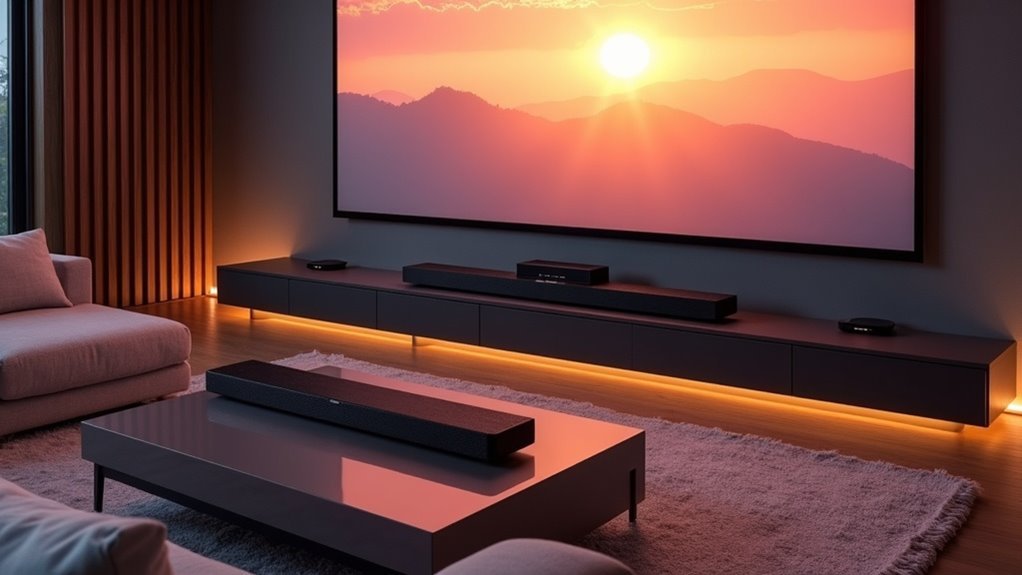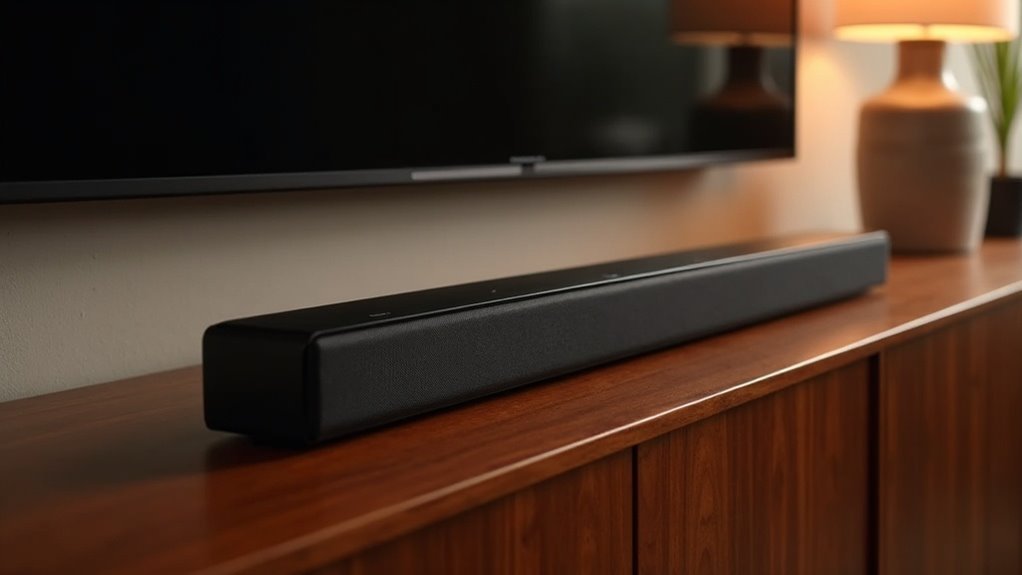
To angle your soundbar for better clarity, position it at ear level when seated. This aligns sound waves directly with your listening position, enhancing audio quality. If mounting is necessary, use adjustable brackets to angle the soundbar slightly downward, avoiding height misalignment. Make sure the area around your soundbar is clear of obstructions that could disrupt sound projection. Adjustments in positioning can greatly impact your audio experience, and there’s a wealth of information available on this website about optimizing your soundbar setup for the best performance.
Key Takeaways
- Position the soundbar at ear level when seated to enhance clarity and dialogue intelligibility.
- Use adjustable mounts to angle the soundbar downwards, improving audio direction towards the listener.
- Ensure the soundbar is placed directly in front of the TV to minimize sound reflections and distortion.
- Keep the area around the soundbar clear of obstructions to allow for optimal sound projection.
- Make slight angling adjustments if the soundbar cannot be positioned at ear level for better audio performance.
Understanding Soundbar Angling
When you angle a soundbar properly, you can greatly enhance your audio experience. By directing audio waves towards your ears, angling adjustments improve sound clarity considerably.
Positioning the soundbar too low diminishes dialogue intelligibility; tilting it upwards guarantees clearer communication. In addition, proper angling minimizes sound reflections from surfaces that distort audio quality, providing a more accurate listening experience.
Utilizing wedge mounts or tilt stands allows for these adjustments without compromising your soundbar setup’s aesthetics.
Ideal Placement for Optimal Sound
To achieve optimal sound quality with your soundbar, proper positioning in relation to your viewing area is essential. For the best sound clarity, position the soundbar at ear level when seated. If that isn’t feasible, angle it slightly to direct the sound towards your seating area. Ensure it is placed directly in front of the TV to minimize reflections and enhance dialogue clarity. Avoid mounting it too high, as this can distort sound waves and result in muffled audio quality. Utilizing adjustable mounts can further improve alignment and overall sound performance.
| Positioning Tips | Benefits |
|---|---|
| Ear Level | Best sound clarity |
| Directly in Front | Reduces sound reflections |
| Adjustable Mounts | Flexibility in directing sound |
Importance of Ear Level Positioning
Positioning your soundbar at ear level is crucial for optimal audio performance. When your soundbar is aligned with your ears, sound waves are directed toward you, enhancing clarity and delivering a more immersive listening experience.
If the soundbar is positioned too high or low, it can lead to distorted sound perception, resulting in muffled dialogue and reduced bass response. Proper ear level positioning minimizes sound reflections and maximizes direct sound, ensuring the best sound quality.
If needed, angling the soundbar slightly upward or downward can help, but aim for alignment with your seated position for the most effective results.
Techniques for Wall-Mounting Soundbars
Four key techniques can enhance your experience when wall-mounting a soundbar.
First, position your soundbar at ear level when seated to optimize sound clarity.
Next, use adjustable mounts to angle downwards, improving audio quality and dialogue intelligibility.
Third, install the soundbar directly below the TV to maintain alignment and avoid sound distortion.
Finally, make certain the soundbar is free from obstacles like shelves or decorative items that can disrupt sound projection.
- Utilize a tilt mount if the soundbar is positioned higher than ear level.
- Ensure proper alignment with the TV for the best audio experience.
- Keep the area around the soundbar clear to prevent any obstruction of sound projection.
Adjusting Angles for Improved Clarity
When wall-mounting your soundbar, adjusting its angle can greatly enhance audio clarity. If your soundbar sits below ear level, angling it slightly upward directs sound waves towards your ears, significantly improving clarity.
Conversely, if it’s mounted above the TV, using a wedge mount to angle it downward ensures that sound effectively reaches the listening area. Proper angling minimizes sound reflections that can distort clarity, allowing direct sound to reach you without interference.
Additionally, if your soundbar features up-firing speakers, ensure they face the ceiling unobstructed for optimal performance. Small angle adjustments can have a considerable impact on overall sound quality, so be sure to test various positions during setup for the best results.
Common Placement Mistakes to Avoid
When positioning your soundbar, it’s crucial to avoid height misalignment, as this can significantly affect audio clarity.
If sound waves don’t reach your listening position effectively, it can lead to a subpar experience. Additionally, ensure that there are no obstructions, such as furniture or decorative items, that could distort sound and diminish overall quality.
Incorrect angling techniques can further complicate the setup, directing audio away from your listening area and reducing immersion.
For the best soundbar experience, pay careful attention to these placement factors.
Height Misalignment Issues
Height misalignment can significantly affect your audio experience when using a soundbar, especially if it’s positioned incorrectly.
To ensure your soundbar delivers optimal performance, keep these points in mind:
- If the soundbar is placed too low, it directs sound waves away from you, diminishing clarity.
- Mounting it too high without angling can muffle dialogue and weaken bass response.
- For the best audio experience, position the soundbar at ear level or tilt it slightly for ideal clarity.
By avoiding height misalignment, you allow sound to project directly toward you, creating a more immersive experience.
Proper alignment is crucial for achieving clear, dynamic audio that enhances your overall viewing experience.
Obstructed Sound Pathways
Obstructed sound pathways can severely compromise your soundbar experience, leading to muffled sound and less clarity.
Placing your soundbar behind or inside furniture blocks effective sound projection, while mounting it too high risks missing the primary listening zone.
Misalignment, such as positioning it off-center, distorts sound perception and weakens bass response.
Additionally, large furniture or decorative items in front of the soundbar can reflect or block sound, degrading audio clarity.
To enhance your soundbar experience, ensure that it’s unobstructed, properly aligned, and positioned at an ideal height, allowing sound waves to reach you directly for maximum impact.
Incorrect Angling Techniques
Proper positioning is key to optimizing your soundbar’s performance, and incorrect angling techniques can greatly hinder audio quality.
To guarantee you achieve maximum audio clarity, avoid these common mistakes:
- Placing the soundbar too far back on a stand, leading to distorted sound waves.
- Angling the soundbar excessively downward if mounted high, which can miss the listening area.
- Positioning the soundbar in a closed cabinet, obstructing sound projection.
For the best sound experience, always ensure that your soundbar is at ear level and directed towards the listening area for optimal audio enjoyment.
Testing and Fine-Tuning Audio Settings
As you begin testing and fine-tuning your soundbar’s audio settings, it’s essential to start with familiar tracks across various genres to assess sound quality accurately.
Listen for clarity, distortion, or imbalance in the audio output. Fine-tune the equalizer presets to enhance speech clarity, reducing bass if dialogues are difficult to understand.
Adjust the soundbar’s angle slightly upward or downward to direct sound waves effectively toward your listening position for optimal performance.
Utilize built-in calibration features for automatic optimization based on room acoustics, ensuring the best sound experience.
Regularly reassess audio quality after adjustments, as minor changes in position or angle can lead to significant improvements in your listening enjoyment with your soundbar.