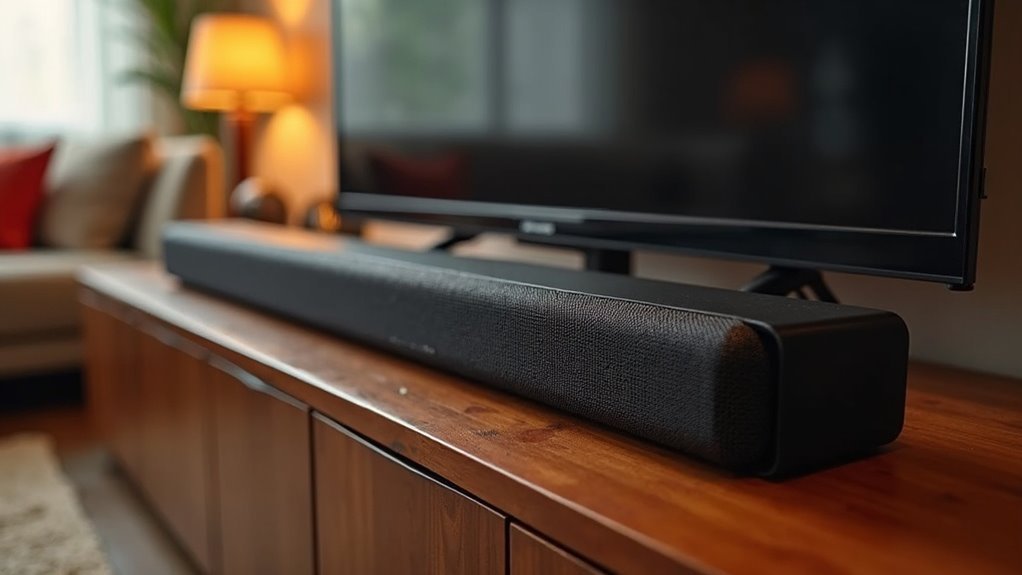
A soundbar typically lasts between 5 to 10 years, but factors like build quality and frequency of use can greatly influence its lifespan. High-quality materials might even extend that to 16 years with proper care. Playing audio at high volumes or neglecting regular maintenance can shorten its life. Monitoring new audio formats and adhering to cleaning routines can ensure your soundbar continues to perform at its best. Want to discover more about extending your soundbar’s lifespan?
Key Takeaways
- Soundbars typically last between 5 to 10 years, depending on usage and build quality.
- High-quality soundbars can last up to 16 years with proper maintenance and care.
- Environmental factors like humidity and temperature can negatively affect a soundbar’s lifespan.
- Regular maintenance, including cleaning and firmware updates, can enhance performance and longevity.
- Technological advancements may make older soundbars obsolete, prompting users to upgrade even if they are still functional.
Factors Influencing Soundbar Lifespan
When considering how long your soundbar will last, several key factors come into play.
Build quality greatly impacts both sound quality and longevity; soundbars made from high-quality materials can endure for up to 16 years.
Build quality is crucial, with high-quality soundbars potentially lasting up to 16 years while delivering superior sound.
Regular usage patterns also matter; playing at high volumes frequently can strain components, shortening lifespan.
Environmental conditions, like extreme temperatures and dust, can further degrade performance.
However, you can extend your soundbar’s life with proper care, including regular cleaning and ensuring adequate ventilation.
Ultimately, technological advancements may prompt you to upgrade within 5 to 10 years, even if your soundbar still functions adequately.
Average Lifespan of Soundbars
While you might wish for your soundbar to last indefinitely, the average lifespan typically ranges from 5 to 10 years.
This duration can vary significantly based on factors such as usage, care, and environmental conditions. High-quality soundbars may surpass the 10-year mark, with some potentially lasting up to 16 years when properly maintained.
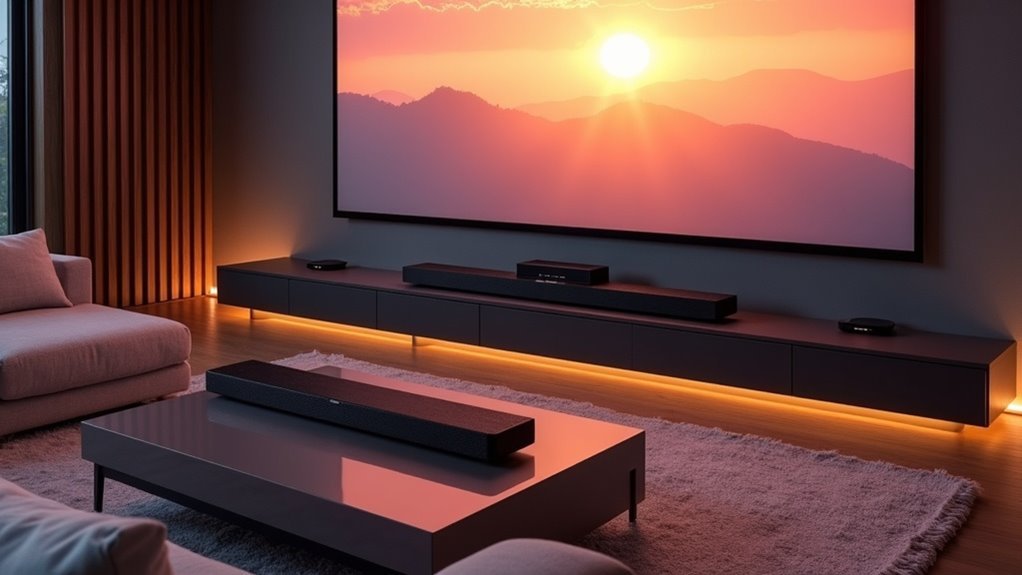
To help maximize the lifespan of soundbars in your home entertainment setup, ensure regular cleaning and sufficient ventilation.
Signs Your Soundbar May Need Replacement
How can you tell if it’s time to upgrade your soundbar? A noticeable decline in sound clarity or volume is often a sign that its internal components are beginning to wear out.
If you’re facing frequent connectivity issues, this could indicate underlying hardware problems that require attention. Visible damage, such as cracks or dents, can also impact performance.
Frequent connectivity issues and visible damage can signal hardware problems that may need urgent attention.
Furthermore, if your soundbar doesn’t support the latest audio formats, you may encounter compatibility issues with newer devices.
Ultimately, an overall decline in functionality, including delayed responses or malfunctioning features, suggests that it’s time for a replacement to ensure you continue to enjoy a high-quality audio experience.
Importance of Maintenance and Care
To keep your soundbar performing at its best, regular cleaning and maintenance are essential.
Dusting the exterior and ensuring firmware updates can greatly enhance its functionality and lifespan.
Regular Cleaning Practices
Regular cleaning practices are essential for maintaining your soundbar’s performance and longevity, as dust accumulation can lead to overheating and diminished sound quality. To enhance your soundbar’s lifespan, consider establishing a consistent cleaning schedule.
| Cleaning Method | Frequency | Tools Needed |
|---|---|---|
| Dusting | Weekly | Soft, dry cloth |
| Deep Cleaning | Monthly | Damp cloth, vacuum |
| Speaker Grille Care | As needed | Compressed air |
Firmware Updates Importance
While you may focus on physical maintenance of your soundbar, neglecting firmware updates can significantly impact its performance.
Regular firmware updates enhance functionality, ensuring compatibility with the latest audio formats and features. By checking for updates through the companion app or the manufacturer’s website, you can avoid potential issues and improve sound quality.
If available, enabling auto-updates allows for seamless upgrades, keeping your soundbar optimized without manual effort. Investing time in these updates can extend your soundbar’s lifespan by addressing bugs and improving system stability.
On the flip side, neglecting them may lead to diminished performance and compatibility problems with newer devices.
Tips to Extend Soundbar Lifespan
Maintaining your soundbar’s longevity is essential if you want to enjoy high-quality audio for years to come. To protect its internal components over time, keep volume levels moderate during regular use.
Regularly clean your soundbar with a soft, dry cloth to prevent dust buildup that can hinder performance. Make sure it’s placed in well-ventilated areas to avoid overheating, and refrain from overloading it with excessive bass or high volume.
Finally, keep the firmware updated to maintain compatibility with the latest audio formats. By following these simple tips, you can extend your soundbar’s lifespan and optimize its sound quality, ensuring you get the best audio experience possible.
Environmental Conditions Impacting Longevity
Environmental conditions play a crucial role in determining the longevity of your soundbar.
Extreme heat can damage internal components, while high humidity may lead to moisture accumulation, causing corrosion and electrical failures.
Extreme heat and high humidity can lead to serious damage, including corrosion and electrical failures in your soundbar.
Dust build-up can obstruct ventilation and speaker grilles, negatively impacting sound quality and increasing the risk of overheating.
Moreover, environments with significant temperature fluctuations can stress materials, leading to increased wear and tear.
By maintaining a clean and stable environment for your soundbar, you can significantly extend its lifespan.
Being aware of these environmental factors helps protect your investment, ensuring that your soundbar delivers optimal performance for years to come.
Build Quality and Its Effect on Durability
When choosing a soundbar, the build quality can greatly influence its durability and overall performance. Soundbars made from high-quality materials, like robust drivers and durable enclosures, often last longer than cheaper options.
Premium soundbars typically incorporate advanced technology and superior components, enhancing both durability and sound clarity. Better build quality reduces resonance and distortion, leading to improved audio output.
Additionally, solid construction makes soundbars less prone to physical damage from daily use, extending their functional life. Investing in a high-quality soundbar not only boosts your audio experience but can also save you money on replacements or repairs over time.
Technological Advancements and Obsolescence
As technology evolves rapidly, your soundbar might become outdated much sooner than you expect.
New audio formats and features can leave older soundbar models struggling to keep up, prompting you to contemplate an upgrade even while they still function.
Staying aware of these advancements is essential for ensuring that your soundbar experience remains exceptional.
Rapid Technology Evolution
In a world where technology evolves at a breakneck pace, soundbars face the risk of becoming obsolete within just 5 to 10 years. Although soundbars are built for durability, their compatibility with new formats often necessitates earlier upgrades.
To ensure your soundbar remains relevant and enhances your home entertainment experience, consider these factors:
- Advanced surround sound systems continue to outperform older models, providing a more immersive audio experience.
- Enhanced connectivity options, like Bluetooth and Wi-Fi capabilities, may render older devices incompatible with the latest technologies.
- Industry shifts, particularly HDMI updates and new audio formats, could leave your soundbar behind if it’s not kept up-to-date.
Regularly evaluating your soundbar every five years is essential to guarantee you’re not missing out on the latest features and audio advancements that can significantly elevate your home entertainment setup.
Compatibility With New Formats
While enjoying your favorite movies or music, it’s essential to reflect on how advancements in audio technology might impact your soundbar’s performance.
As new formats like Dolby Atmos and DTS:X emerge, older soundbars can quickly become obsolete if they lack compatibility with these innovations. Additionally, evolving HDMI standards may prevent older models from connecting to the latest TVs and devices, forcing you to upgrade for peak sound.
Regular firmware updates can enhance compatibility, but not all soundbars support easy updates. It’s crucial to assess your soundbar’s ability to handle current and emerging audio technologies to ensure you continue enjoying high-quality sound.