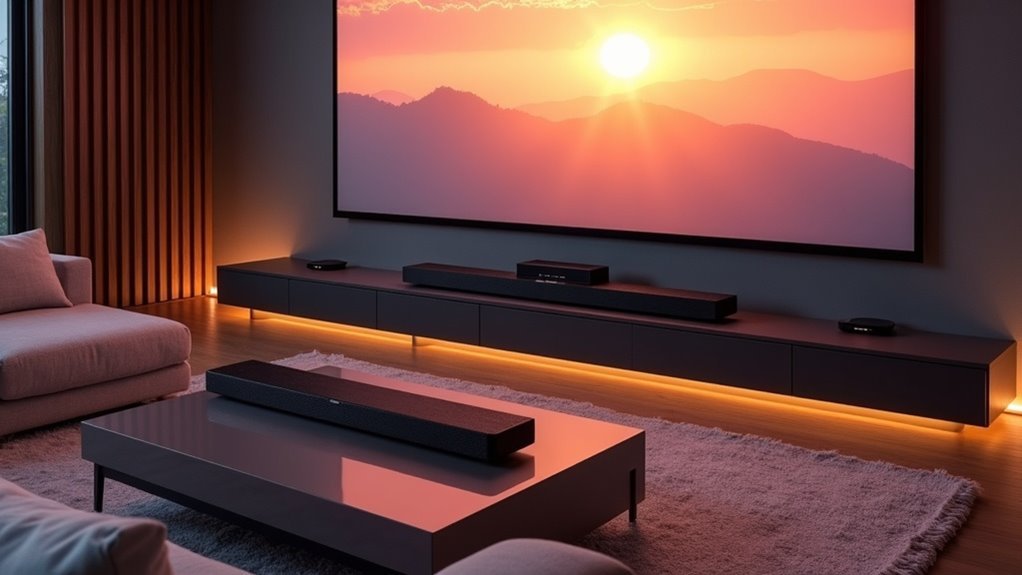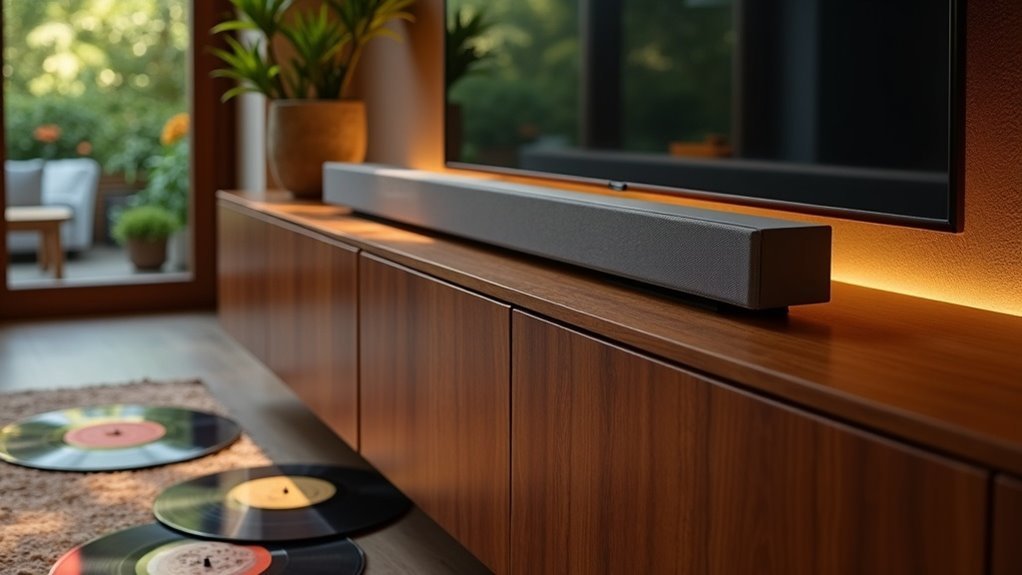
Soundbars are primarily designed to enhance TV audio, but they may not be the best option for music listening. Their compact design can limit stereo imaging, and smaller drivers might compromise bass response and overall audio fidelity. While features like Dolby Atmos can improve the immersive experience for movies, dedicated stereo systems generally provide richer sound quality and a wider frequency range for music. If you’re passionate about music, it’s worth exploring other audio alternatives to ensure a more satisfying listening experience. Check out the various soundbar options available to find one that meets your audio needs while still being a convenient choice for your home entertainment setup.
Key Takeaways
- Soundbars can enhance TV audio, but they often don’t deliver the audio fidelity and immersive experience that dedicated audio systems provide, which is important for serious music listeners.
- The compact designs of soundbars can limit their stereo imaging and bass response, potentially compromising overall audio quality when it comes to music playback.
- Many soundbars focus on clarity for dialogue, which may lead to a lack of nuanced highs and lows in music, resulting in a less dynamic sound profile.
- Advanced soundbars with built-in subwoofers and support for high-resolution audio can improve the music experience, but they may still fall short compared to dedicated audio systems.
- If you’re considering a soundbar for music, look for models that boast high fidelity audio specifications and offer adjustable EQ settings for a more customized listening experience.
Understanding Sound Priorities
When considering how to enjoy music, it’s essential to understand your sound priorities, particularly when comparing options like soundbars and dedicated audio systems.
While dedicated systems are known for their superior sound quality, soundbars have evolved significantly and can deliver impressive audio experiences in a compact form. Many soundbars now feature advanced technologies, such as Dolby Atmos and virtual surround sound, which can create an immersive listening environment that enhances music enjoyment.
Soundbars have advanced significantly, offering immersive audio experiences with technologies like Dolby Atmos, enhancing your music enjoyment in a compact design.
Although soundbars are primarily designed to improve TV audio, many models offer rich sound profiles that can rival traditional audio setups for casual listening.
If space is a concern or you’re looking for a versatile solution that also enhances your TV viewing, investing in a quality soundbar can be an excellent choice for enjoying music without sacrificing convenience.
Limitations of Soundbars
Soundbars often fall short in stereo imaging due to their limited driver sizes and compact configurations, which can hinder your overall listening experience.
Additionally, the digital signal processing used in many soundbar models may compromise audio purity, affecting sound fidelity compared to dedicated audio systems.
These constraints make soundbars less suitable for achieving the immersive sound quality that serious music listeners expect.
Stereo Imaging Constraints
While many consumers appreciate the convenience of soundbars, it’s important to understand that their design inherently limits stereo imaging capabilities.
Soundbar designs typically feature a narrow width, which restricts the creation of a wide stereo image compared to traditional stereo setups. The placement and size of drivers within these soundbars compromise spatial separation, making it difficult to accurately reproduce instruments and vocals.
Most soundbars rely on digital signal processing to simulate a surround sound experience, which can dilute audio purity and affect imaging accuracy.
These physical constraints also prevent the use of larger drivers that are necessary for achieving true high-fidelity sound, ultimately diminishing the immersive music listening experience that many users seek.
Audio Purity Challenges
While soundbars provide a compact and convenient audio solution for enhancing TV sound, they do face notable challenges in achieving audio purity. Their limited width restricts the creation of a wide stereo image, which can impact the quality of music playback.
Additionally, smaller drivers in soundbars often compromise bass response and overall audio fidelity, leading to a less immersive listening experience. The Digital Signal Processing (DSP) technology used in soundbars can also alter the audio, potentially detracting from its original quality.
Although a premium soundbar can significantly enhance TV audio, it typically doesn’t match the performance of dedicated loudspeakers. For those who prioritize clarity and depth in their audio experience, exploring higher-end soundbar options or considering a traditional stereo setup may be worthwhile for superior music reproduction.
Alternatives to Soundbars
If you’re seeking better audio quality for music, consider exploring advanced soundbar options.
Some models come with additional features like separate wireless subwoofers and multi-speaker setups that significantly enhance soundstage and imaging.
Investing in high-quality soundbars with integrated DACs can provide an immersive listening experience that rivals traditional stereo systems, making them a great choice for music lovers who want simplicity without sacrificing sound fidelity.
Stereo Systems Advantages
When considering sound enhancement solutions, soundbars offer a range of compelling features that make them an attractive option for many users.
Here are four key advantages of soundbars:
- Compact Design: Soundbars provide an all-in-one audio solution that saves space and reduces clutter compared to traditional stereo systems.
- Easy Setup: With straightforward installation and minimal wiring, soundbars are user-friendly and can be set up quickly for immediate enjoyment.
- Surround Sound Simulation: Many soundbars come equipped with technology that simulates surround sound, creating an immersive audio experience without the need for multiple speakers.
- Connectivity Options: Soundbars typically offer various connectivity options, including Bluetooth and HDMI, making it easy to connect to TVs, smartphones, and other devices.
These benefits make soundbars a preferred choice for those seeking enhanced audio without the complexity of a traditional stereo system.
High-Fidelity Audio Solutions
While high-fidelity audio solutions offer impressive sound quality, soundbars provide a unique blend of convenience and compact design that’s hard to beat.
Modern soundbars utilize advanced technology to deliver an enhanced audio experience, often incorporating features like surround sound simulations and built-in subwoofers. Many soundbars are designed to fit seamlessly into your home entertainment setup, offering space-saving solutions without sacrificing audio performance.
Additionally, soundbars frequently come with user-friendly features like Bluetooth connectivity and voice control, making them a practical choice for everyday use. For those seeking an upgrade, selecting a high-quality soundbar can elevate your home audio experience without the complexity of a full stereo system.
Recommended Stereo Systems
Choosing the right soundbar can significantly enhance your audio experience, whether you’re watching movies, playing games, or enjoying music.
A well-selected soundbar can elevate your TV sound quality and create a more immersive atmosphere. Here are some recommended options:
- Sonos Beam – Compact yet powerful, perfect for smaller spaces at around $399.
- Bose Soundbar 700 – Premium sound with Alexa built-in, priced at about $799.
- Samsung HW-Q950A – Impressive surround sound experience with Dolby Atmos for approximately $1,299.
- LG SN11RG – High-fidelity audio with a wireless subwoofer, available for around $1,499.
Each soundbar offers outstanding sound quality tailored for your home entertainment needs.
Benefits of Soundbars for Music
Soundbars offer significant advantages for music listening, as they utilize multiple drivers to produce a fuller sound across a broader frequency range than traditional TV speakers.
The best soundbars enhance audio clarity, catering to audiophile standards with high-resolution audio streaming. Integrated subwoofers, like those in the Polk Audio Magnifi Mini AX, deliver deeper bass, ideal for bass-heavy genres.
Additionally, Bluetooth and Wi-Fi connectivity facilitate easy access to streaming services, allowing you to play music wirelessly.
Models featuring Dolby Atmos technology, such as the Sonos Arc Ultra, create a truly immersive listening experience, transforming your space into an engaging audio environment.
Final Thoughts on Sound Quality
While soundbars can significantly enhance your audio experience for movies and TV shows, they may not fully satisfy the high-fidelity standards that music enthusiasts often seek.
Here are some important factors to consider:
- Limited driver sizes can restrict sound quality and frequency range, impacting overall audio performance.
- A narrower soundstage and stereo imaging may detract from the immersive experience when listening to music.
- Some soundbars use Digital Signal Processing (DSP), which can affect audio purity, potentially compromising clarity and detail.
- Many soundbars are designed primarily for enhancing dialogue, which means they might overlook the nuanced highs and lows that are essential for a rich music experience.
For those seeking the best possible sound for music, dedicated stereo systems provide superior sound quality and customization options that soundbars typically can’t match.
However, if a soundbar is your choice, focusing on models that prioritize clarity and detail can still enhance your music enjoyment.