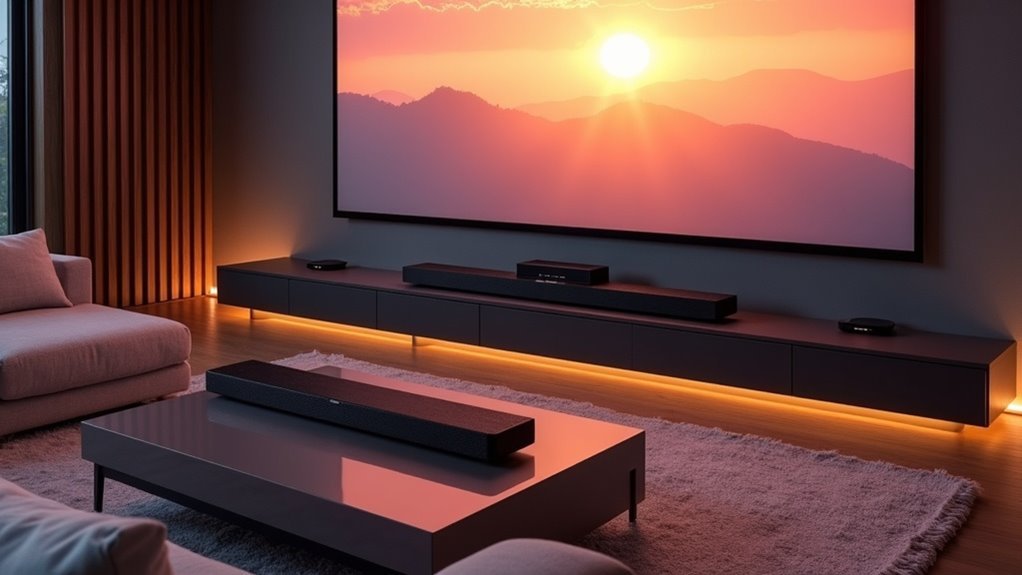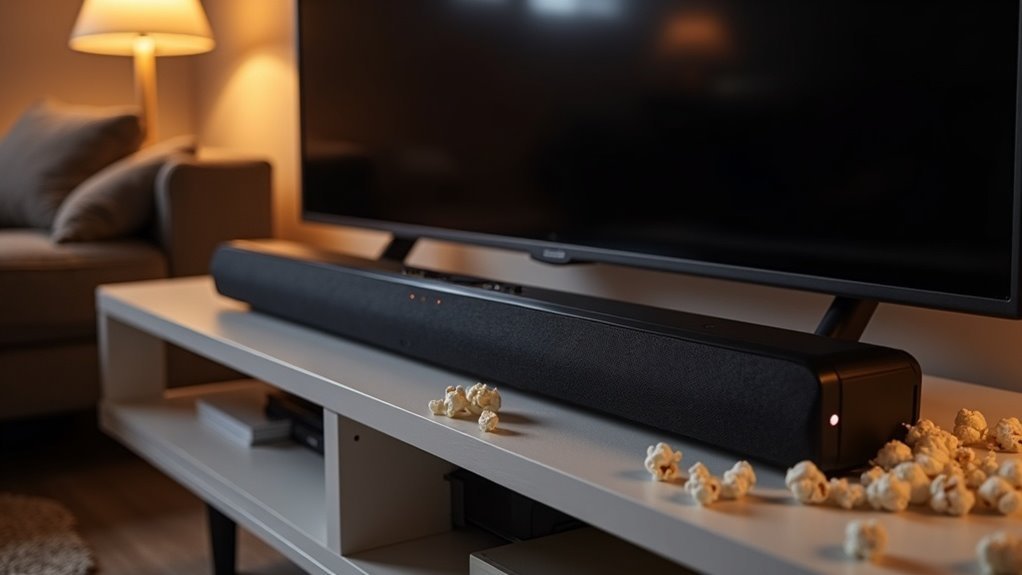
A soundbar center channel is an essential audio component that enhances dialogue clarity by centering sound in your listening space. Unlike traditional center speakers, soundbars integrate multiple channels to simulate surround sound while offering built-in amplification for easy setup. They provide balanced sound across frequencies, making them versatile and compact. However, they can have limitations in audio clarity if not configured properly. To optimize your experience with soundbars, consider placement and additional enhancements to enrich your home theater setup.
Key Takeaways
- A soundbar center channel enhances dialogue clarity by centralizing audio, providing a more immersive viewing experience for users of soundbars.
- Unlike traditional center speakers, soundbars integrate multiple channels, simulating surround sound without the need for additional equipment, making them a convenient choice for soundbar enthusiasts.
- Built-in amplification allows for direct connections to TVs, simplifying setup and reducing the number of devices needed for those who prefer soundbars.
- Soundbars can produce balanced sound across various frequencies, improving versatility for different media types, catering to diverse audio preferences.
- Optimal placement is crucial for soundbars; positioning them at ear height and avoiding enclosed spaces enhances audio quality, ensuring the best experience for soundbar users.
Understanding the Soundbar Center Channel Functionality
When you’re setting up a soundbar, comprehending its center channel functionality is crucial for enhancing your audio experience. The center channel plays a vital role in improving dialogue clarity by positioning sound centrally in your listening space.
Unlike traditional center channel speakers, soundbars typically blend audio from the left and right channels, which can create muddy sound if not configured correctly. Many soundbars utilize advanced audio processing techniques to simulate surround sound, further enriching the immersive experience.
Keep in mind that the effectiveness of the center channel is affected by room acoustics and placement; improper positioning can lead to frequency cancellation and diminished audio clarity.
Comparing Soundbars and Traditional Center Speakers
Understanding the differences between soundbars and traditional center speakers can greatly enhance your audio experience.
Soundbars integrate multiple channels, including a center channel, to create a simulated surround sound experience that’s ideal for modern entertainment setups. They’re designed to provide a comprehensive audio solution in a compact form factor, making them perfect for those who want to simplify their home theater without sacrificing sound quality.
Soundbars offer a compact, multi-channel audio solution that simplifies home theater setups while maintaining excellent sound quality.
Unlike traditional center speakers, which are dedicated components that enhance dialogue clarity in a surround sound system, soundbars are typically active with built-in amplification. This means that they can easily connect to your TV or other devices without the need for additional equipment.
While dedicated center speakers deliver precise vocal audio, soundbars are engineered to produce a balanced sound across various frequencies, making them versatile for different types of media.
For those looking for convenience and a streamlined audio experience, soundbars represent an excellent choice, offering a blend of performance and practicality that appeals to many users today.
Benefits of Using a Soundbar Center Channel
Using a soundbar center channel significantly elevates your audio experience by delivering clearer dialogue and a more immersive soundstage.
With a centralized audio source, it enhances dialogue clarity, making it easier to follow conversations in movies and TV shows. Soundbars effectively emulate dedicated center channel speakers, creating a rich audio environment without the clutter associated with traditional surround sound setups.
Many soundbar models come equipped with built-in amplification, allowing for a direct connection to your TV without the need for additional receivers. Advanced audio processing technology improves vocal separation, ensuring that dialogue remains clear and distinct, even amidst background noise.
Furthermore, soundbars offer a cost-effective, sleek, and space-saving alternative to conventional center channel speakers, making them an ideal choice for any home entertainment setup.
Limitations of Soundbar Center Channels
While soundbars provide a stylish and compact solution for audio, they do have significant limitations in terms of clarity and audio distribution.
The lack of a dedicated center channel can lead to dialogue that feels less precise and lacks depth, which may cause an imbalance in the soundstage.
Furthermore, without individual channels, the sound quality can become muddled, ultimately detracting from your overall listening experience.
Limited Audio Clarity
Clarity in audio is often compromised when relying solely on soundbar center channels. Without a dedicated center speaker, you may experience limited audio clarity, especially for dialogue, as sound mixes between the left and right speakers.
This reliance on sound reflection techniques to create a phantom center can lead to less precise audio localization, making dialogue sound muddled. Additionally, when soundbars simulate surround sound without a true center channel, clarity during conversations—particularly in dialogue-heavy scenes—can suffer.
Incorrect configurations can exacerbate these issues, resulting in frequency cancellation that diminishes vocal performance and compromises your overall listening experience.
Choosing a soundbar with a dedicated center channel can greatly enhance your audio clarity, especially for dialogue, providing a more immersive and enjoyable experience.
Soundstage Imbalance Issues
Soundstage imbalance can significantly impact your audio experience when using soundbars that lack a dedicated center channel. Without a center channel speaker, clarity in dialogue is often compromised as soundbars attempt to create a phantom center image, which can lead to less effective audio localization. In complex soundscapes, distinguishing dialogue from surround sounds may become challenging. This absence of a dedicated speaker frequently results in frequency cancellation, causing the audio to sound muddled. Here’s a quick overview of soundstage issues related to soundbars:
| Issue | Effect on Audio | Solution |
|---|---|---|
| No dedicated center | Poor dialogue clarity | Consider adding a center channel speaker |
| Phantom center | Unclear localization | Upgrade to a multi-channel setup |
| Audio blending | Muddied sound | Use separate speakers alongside the soundbar |
| Stereo focus | Limited central audio handling | Implement a surround system for enhanced experience |
| Frequency cancellation | Distorted sound | Optimize soundbar placement and settings |
Lack of Dedicated Channels
Although many consumers prefer soundbars for their compact design and simplicity, the absence of dedicated channels, especially a center channel, can significantly hinder audio performance.
Soundbars generally lack a true center channel speaker, which compromises the clarity and localization of dialogue. Instead, they attempt to simulate this audio through sound reflection techniques between the left and right speakers, resulting in less precise audio imaging.
This limitation can lead to muddled sound during complex audio presentations, particularly when multiple sound sources are involved. While some advanced soundbar models attempt to create a phantom center channel, their effectiveness can diminish in larger rooms, making vocal clarity a notable challenge.
Optimal Placement for Soundbar Center Channels
To achieve the best audio experience with your soundbar center channel, placing it directly below or above your television screen is essential, as this alignment guarantees that the sound matches the action on the screen.
For ideal placement, consider these factors:
- Ensure the soundbar is level with ear height when seated for clearer dialogue.
- Avoid enclosing the soundbar in cabinets to prevent muffled audio.
- If wall-mounted, angle the soundbar slightly downward towards the listening area.
- Maintain equal distance from the left and right stereo speakers to create a balanced soundstage and enhance overall sound quality.
For more tips and information on optimizing your soundbar setup, explore our resources on soundbars.
Enhancing Audio Experience With a Soundbar
When you invest in a soundbar, you’re not just upgrading your audio setup; you’re enhancing your entire viewing experience.
A soundbar’s center channel is vital for improving audio clarity, ensuring that dialogue is crisp and easy to understand. With advanced audio processing technologies like Dolby Atmos, your soundbar can create a virtual surround sound experience, simulating multiple audio channels.
Additionally, built-in amplification allows for a direct connection to your TV, streamlining your setup process. For an even richer audio experience, consider pairing your soundbar with subwoofers or additional speakers.
This combination further enhances the overall soundstage, delivering immersive stereo sound that elevates every movie or show you watch.