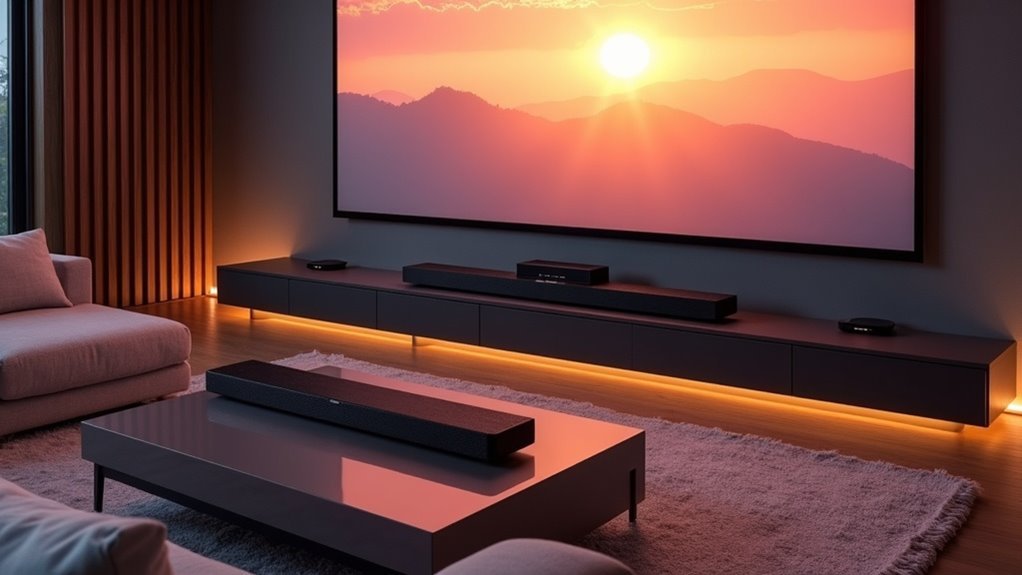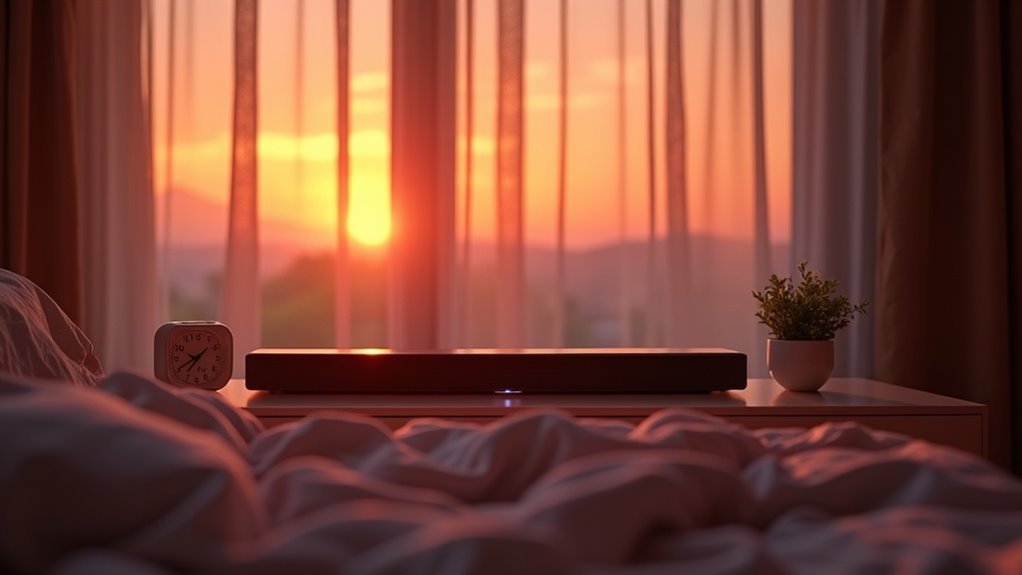
Soundbars can easily violate apartment quiet hours if not carefully managed. They often produce high volume levels, especially bass, which can disturb your neighbors during nighttime silence. To stay compliant, keep the volume below 40 decibels and utilize features like night mode. Understanding local noise ordinances is essential too. With proper precautions, you can enjoy your soundbar without conflict. Discover effective strategies for noise management and maintaining good neighborly relations that enhance your living experience with your soundbar.
Key Takeaways
- Soundbars can violate quiet hours if played at excessive volumes, typically above 40 decibels during designated quiet times.
- Bass frequencies from soundbars may disturb neighbors even at lower volume settings, making compliance challenging.
- Local noise ordinances generally limit noise levels to 35-45 dB during quiet hours to ensure peaceful living in apartment settings.
- Utilizing soundbar features like night mode and volume limiters can help maintain compliance with quiet hours and minimize disturbances.
- Open communication with neighbors and strategic placement of the soundbar can be essential for adhering to noise regulations and ensuring a harmonious living environment.
Understanding Apartment Quiet Hours
Understanding apartment quiet hours is essential for maintaining a peaceful living environment, especially when using soundbars.
Typically set from 10 PM to 7 AM, these quiet hours require you to keep noise levels to a minimum, avoiding activities such as playing loud music through your soundbar.
Excessive noise can lead to complaints, jeopardizing your right to a serene living space. It’s important to communicate with neighbors to ensure everyone adheres to these regulations.
Excessive noise can lead to complaints, threatening your peaceful living environment; open communication with neighbors is key to compliance.
Disregarding quiet hours may result in noise violations, lease warnings, or even eviction.
Being considerate of sound levels during these times helps promote respectful coexistence among tenants while enjoying your soundbar.
The Impact of Soundbars on Noise Levels
When you use a soundbar, its ability to reach high volume levels can easily disrupt quiet hours in your apartment.
The bass frequencies produced can travel through walls, potentially bothering neighbors even at lower settings.
To minimize disturbances, it’s recommended to keep the volume below 40 decibels and utilize features like night modes for a more harmonious living environment.
This ensures that you can enjoy your soundbar without negatively impacting those around you.
Soundbar Volume Control
Although soundbars enhance your viewing experience with superior audio quality, they can also pose challenges for maintaining noise levels in apartment living.
Soundbar volume control is essential, as these devices can reach up to 100 decibels, easily exceeding acceptable noise levels during quiet hours. Even at lower settings, vibrations and bass resonance may disturb others.
To manage noise, utilize features like night mode or volume limiters. Additionally, consider soundproofing measures or using headphones for a peaceful environment.
Remember, communication is key; being mindful of your soundbar settings can help prevent noise complaints and maintain good relationships with neighbors.
Explore the wide range of soundbars available to find one that suits your audio needs while keeping noise levels in check.
Disturbance During Quiet Hours
As soundbars deliver powerful audio experiences, they can unintentionally create disturbances during designated quiet hours, particularly in apartment settings where noise regulations are strict.
Excessive noise from soundbars often exceeds acceptable sound levels, reaching above 45 dB during the day and 35 dB in the evening. This can disturb neighbors and violate local noise ordinances, especially during the typical quiet hours from 10 PM to 7 AM.
To maintain a peaceful environment while enjoying your soundbar, it’s important to be mindful of your volume settings. Opt for lower levels or consider using headphones to prevent disturbances and comply with noise regulations in apartment complexes.
How to Use Soundbars Responsibly
Using soundbars responsibly in an apartment involves a few key practices that ensure you enjoy your audio experience without disturbing your neighbors.
Maintain noise levels at or below 45 dB during the day, dropping to 35 dB during quiet hours. Utilize night mode or volume-limiting features for late-night use.
Position your soundbar away from shared walls to minimize sound transmission, respecting your neighbors’ right to quiet enjoyment.
During designated quiet hours, consider using headphones or Bluetooth devices.
Always be mindful of the content’s nature, avoiding loud scenes that disrupt noise policies, and promote open communication with neighbors for harmonious apartment living.
Local Noise Ordinances and Soundbars
While enjoying your soundbar, it’s crucial to be aware of the local noise ordinances that dictate acceptable noise levels, particularly in apartment environments. Soundbars can easily generate sound levels that exceed permissible limits, especially during designated quiet hours.
| Time Frame | Maximum Noise Level (dB) |
|---|---|
| Evening (10 PM – 7 AM) | 35-45 |
| Daytime (7 AM – 10 PM) | 55-65 |
| Quiet Hours | Compliance Recommended |
| Excessive Noise | Avoid to Prevent Complaints |
Being mindful of your volume settings and strategically placing your soundbar can contribute to a harmonious living space and help avoid noise complaints, ensuring adherence to both apartment regulations and local noise ordinances.
Communicating With Neighbors About Noise
Addressing noise issues with your neighbors requires a tactful approach that emphasizes constructive communication, especially when soundbars are involved.
The first step in resolving noise complaints is to calmly discuss your concerns about how their soundbar may be affecting your living environment. To help your neighbor understand, consider these actions:
- Document instances of excessive noise from their soundbar, noting dates and levels at different times.
- Use specific examples of how the soundbar’s volume affected your peaceful environment, such as disruptions during quiet hours or while watching your own shows.
- Maintain respectful communication to foster better relationships, which could lead to them adjusting their soundbar settings.
If direct discussions fail, you may need to submit a formal complaint to your landlord, including your documentation about the soundbar noise.
Clear communication can lead to solutions and a more harmonious living situation.
Soundproofing Solutions for Soundbar Users
To maintain a peaceful living environment, soundproofing solutions for soundbar users can greatly reduce noise disturbances during quiet hours.
Utilizing sound-absorbing rugs can dampen vibrations, effectively lowering noise levels. Installing soundproof curtains prevents sound leakage and enhances room acoustics, making your soundbar experience more enjoyable.
Additionally, placing your soundbar on vibration-dampening pads isolates it from the floor, minimizing bass impact that could lead to noise complaints.
Finally, ensure your soundbar’s volume remains below 40 dB for compliance with apartment noise regulations.
Implementing these strategies will help you enjoy your soundbar while being considerate of your neighbors.