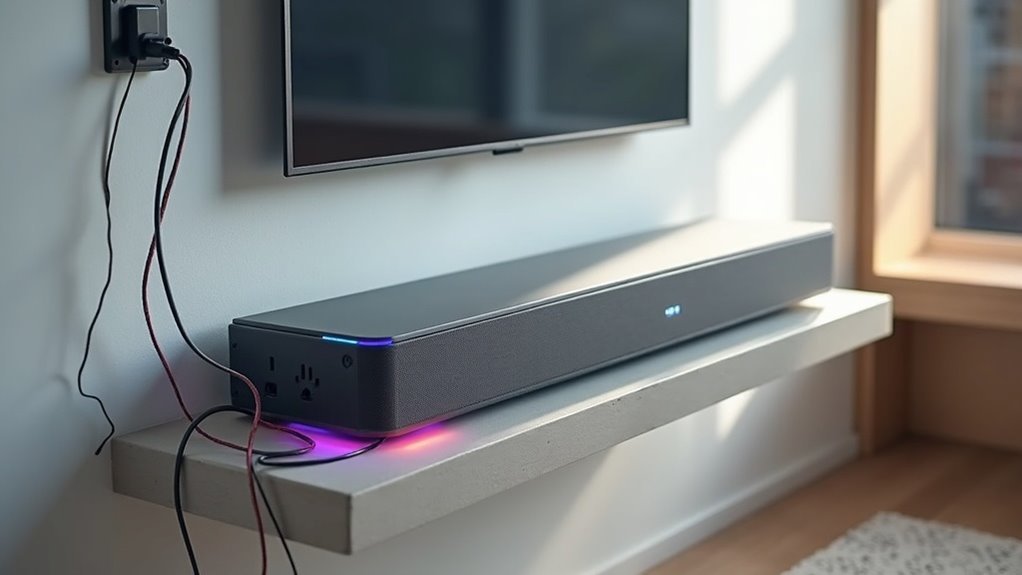
Soundbars typically receive power through three main sources: AC power, batteries, and USB connections. AC-powered models plug into electrical outlets, delivering high audio output, which is ideal for fixed installations in your home theater setup. Battery-powered soundbars utilize rechargeable batteries, offering portability for outdoor use, but they may have limitations in sound quality compared to wired options. USB power is suitable for compact settings, allowing soundbars to draw energy from devices like laptops or gaming consoles, though this may result in lower audio output. Understanding these differences is essential for selecting the right soundbar for your needs, and there are other important aspects to consider as well.
Key Takeaways
- Soundbars typically receive power through AC power sources, requiring a connection to electrical outlets for consistent operation.
- Battery-powered soundbars use rechargeable lithium-ion batteries, providing portability for outdoor events and travel.
- USB-powered soundbars draw energy directly from USB-enabled devices, making them suitable for compact spaces and energy efficiency.
- Wireless subwoofers, often paired with soundbars, also need to be plugged into power sources for optimal performance.
- The choice of power source depends on usage scenarios, balancing between portability and sound quality needs.
AC Power Source for Soundbars
How do soundbars harness power effectively? They utilize an AC power source by plugging into an electrical outlet, which provides a steady power supply vital for optimal performance.
This setup is perfect for permanent installations in living rooms or dedicated media rooms, ensuring reliable operation. AC-powered soundbars deliver higher power output, making them ideal for home theater systems that include multiple speakers, enhancing your audio experience.
The consistent electrical supply enables fuller, dynamic sound quality, far surpassing battery-powered models. This power source is essential for soundbars designed for extended use, preventing interruptions that might occur with battery-operated devices and ensuring continuous audio enjoyment.
Battery-Powered Soundbars
While AC-powered soundbars are the standard choice for home theater setups, battery-powered soundbars provide distinct advantages in terms of portability and convenience. These soundbars are fitted with rechargeable lithium-ion batteries, allowing them to deliver impressive sound quality without the need for a constant power supply. The battery life ranges from 6 to 20 hours, depending on usage and volume, making them perfect for outdoor events or travel. However, they generally do not match the audio output of AC-powered models and are better suited for small spaces.
| Feature | Battery-Powered Soundbars |
|---|---|
| Battery Type | Rechargeable Lithium-Ion |
| Battery Life | 6 to 20 Hours |
| Ideal Use | Portable/Compact Spaces |
USB Power Soundbars
USB power soundbars provide a convenient audio upgrade without the need for a wall outlet. These soundbars draw power directly from USB-enabled devices, making them perfect for compact spaces like personal offices or dorm rooms.
Their energy efficiency is impressive, as they use less electricity compared to larger, AC-powered models. However, it’s important to note that the sound output of USB power soundbars is generally limited, which may not satisfy the requirements of extensive home theater setups.
While they excel in portability, they typically don’t offer the same sound quality or power as their AC counterparts.
Choosing the Right Power Option
Choosing the Right Power Option for Your Soundbar
Selecting the right power option for your soundbar greatly influences its performance and suitability for your space. AC-powered models are ideal for permanent setups, delivering consistent sound quality and high output, perfect for home theaters.
In contrast, battery-powered soundbars offer portability with rechargeable lithium-ion batteries, making them suitable for outdoor use but generally limited to 6-20 hours of playback.
Assess your usage scenario carefully; if mobility and convenience are priorities, a battery-powered option may suffice. However, for dedicated environments, opt for AC-powered models to ensure peak performance.
Your choice will significantly impact sound quality and overall usability, making it essential to consider your specific needs when selecting a soundbar.
Power Source for Wireless Sound Bars
When powering wireless sound bars, it’s essential to connect them directly to an electrical outlet, as they require more energy than typical devices like televisions.
Each sound bar comes with a dedicated power cord that must be plugged into a wall socket or power strip to ensure consistent power for optimal sound performance.
Moreover, if your setup includes a wireless subwoofer, it will also need its own power source, meaning both the sound bar and the subwoofer must remain plugged in for the best audio experience.
Powering Wireless Sound Bars
Although many consumers may assume that wireless sound bars operate independently of traditional power sources, they actually require a direct connection to an electrical outlet. Each sound bar comes equipped with a power cord that needs to be plugged into a wall socket or power strip for a consistent power supply.
Despite their “wireless” designation, these sound bars consume more electricity than typical televisions, highlighting the necessity of an independent power source. Additionally, associated subwoofers also require their own electrical connections, emphasizing the importance of proper audio setups that facilitate both power and audio signal transmission.
Connection Types Explained
Understanding the connection types for soundbars is essential for guaranteeing ideal performance in your home audio setup. Despite their wireless capabilities, these soundbars require a direct connection to a wall socket to operate. Each unit includes a power cord that plugs into an outlet or power strip, ensuring continuous power for peak sound quality.
Additionally, accompanying wireless subwoofers also need separate power sources, necessitating their own connections. While some portable models may have rechargeable batteries, they’re less common in home theater systems, where consistent power is critical for delivering rich, immersive audio experiences.
Limitations of Power Supply
Since soundbars require more power than most televisions can provide, their operational limitations stem from their dependence on external power sources.
You’ll need to plug each soundbar into a separate wall outlet or power strip to ensure effective functionality.
While wireless technologies like Bluetooth or Wi-Fi facilitate convenient audio transmission, they don’t eliminate the necessity for a power connection.
Consistent power delivery is essential for high-quality sound reproduction, as soundbars and their accompanying subwoofers must be plugged in to operate.
Understanding these limitations is fundamental for optimizing your soundbar experience within your home entertainment setup.
Subwoofer Power Requirements
Subwoofers play an essential role in enhancing your audio experience with soundbars, but they come with specific power requirements that must be met for ideal performance. Here’s what you need to know:
- Wireless subwoofers need their own power source; they can’t draw power from the soundbar or TV.
- Both the soundbar and subwoofer must be plugged into electrical outlets to operate effectively.
- Power delivery for subwoofers is distinct from audio transmission, ensuring high-quality sound performance.
Without a dedicated power source, your subwoofer can’t enhance the audio experience, even if it connects wirelessly to the soundbar.
Make sure to consider these power requirements for optimal sound quality in your soundbar setup.